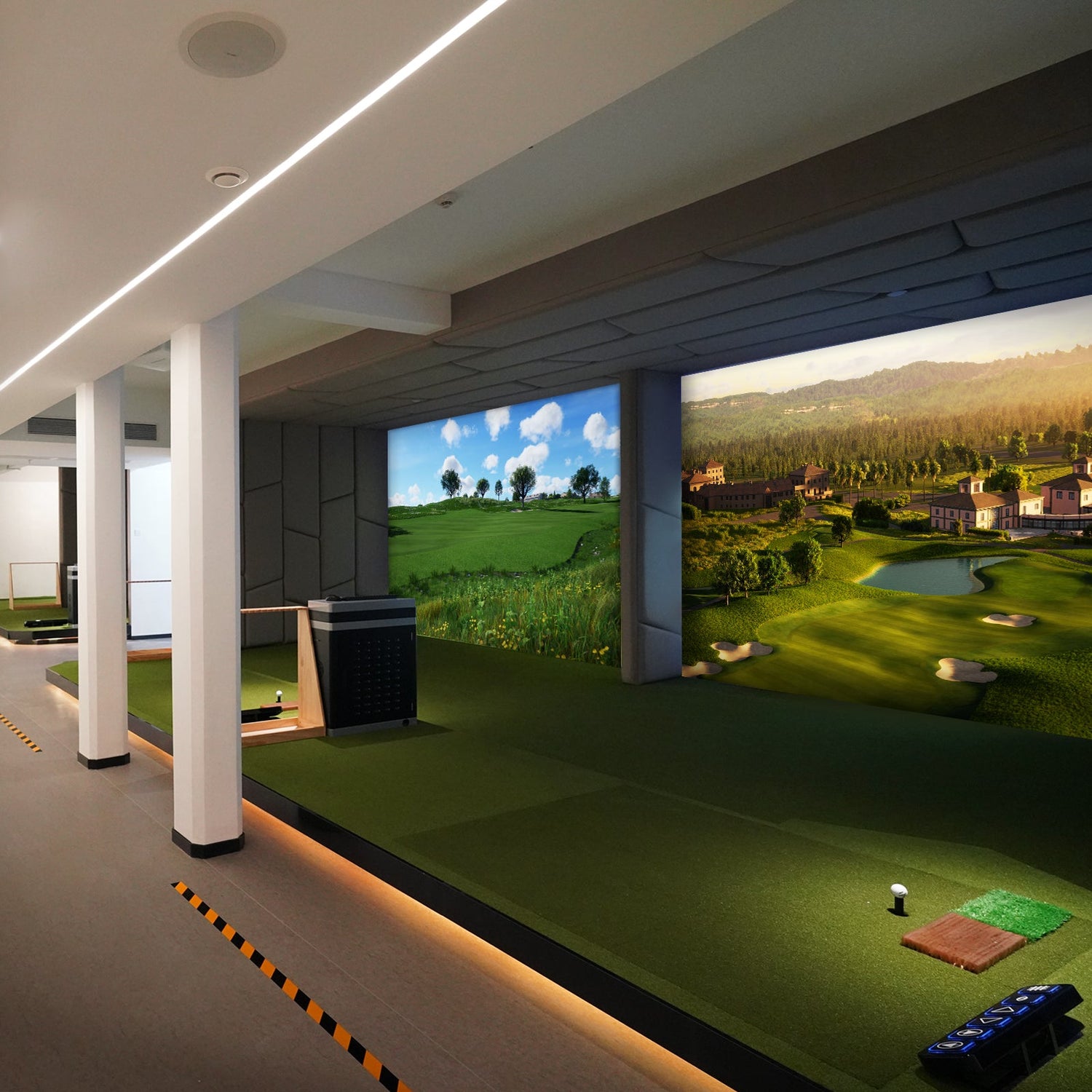
Golf is a cherished sport that connects people with nature, enjoying immense popularity in regions such as the United States, South Korea, EU, Japan, and Australia. However, traditional outdoor golfing can be heavily influenced by weather conditions, which has led to the rise of indoor golf simulators. These innovative systems allow golf enthusiasts to practice and play regardless of external factors.
How Indoor Golf Simulators Work
Indoor golf simulators rely on detailed blueprints and authentic footage of golf courses, all rendered in stunning 3D graphics. A projector casts these visuals onto a screen positioned in front of the golfer. Advanced sensors capture and analyze the ball's flight data alongside clubhead metrics during swings, accurately projecting the ball's trajectory on the screen. Players can utilize real golf clubs and balls, choosing to either practice at a driving range or navigate through a full 18-hole simulated course.
While indoor simulators replicate the golfing experience, the displayed scenarios closely mirror those found on actual golf courses. Players can hear realistic sound effects, such as the ball splashing into water hazards or striking a tree. The system also displays critical information like wind direction and speed, green slopes, and flag placements, all of which are essential considerations in outdoor play.
Key Components of Indoor Golf Simulators
An indoor golf simulator comprises several key elements, including launch monitors, projectors, computer systems, intelligent external control units, cameras, software, display screens, and automatic ball dispensers. Some models come equipped with advanced putting systems, dynamic platforms, and additional display features. Moreover, these simulators can seamlessly integrate with entertainment systems, including karaoke, home theaters, and virtual reality games.
The heart of the indoor golf simulator lies in its software and sensor technology. The software enhances the interface's usability and visual appeal, while the sensors are crucial for ensuring precise data regarding ball flight and swing performance. This combination of technology provides users with an immersive and realistic golfing experience, making it an attractive option for both casual players and serious golfers alike.




Deixar comentário
Este site é protegido por hCaptcha e a Política de privacidade e os Termos de serviço do hCaptcha se aplicam.